
TFI International is not suitable for investors prone to panic after a challenging quarter. Decreases in freight volumes result in swift earnings declines, negative sentiment, and quick stock declines. This was clear when management issued a warning about a steep profit drop, prompting the market to respond sharply.
This is where it becomes fascinating. TFI continues to be a significant transportation and logistics entity in North America, with a robust network, a tested acquisition approach, and a scale capable of yielding notable profitability when the cycle shifts. The stock has already absorbed considerable bad news, leading to the question of whether it marks a broken narrative or a cyclical reset offering a chance.
A Network Built for More Than Just Freight
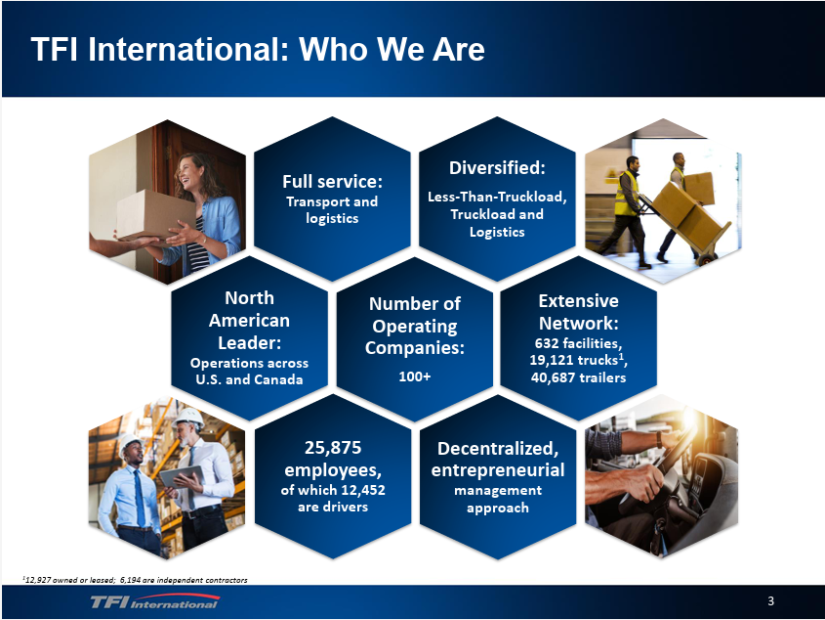
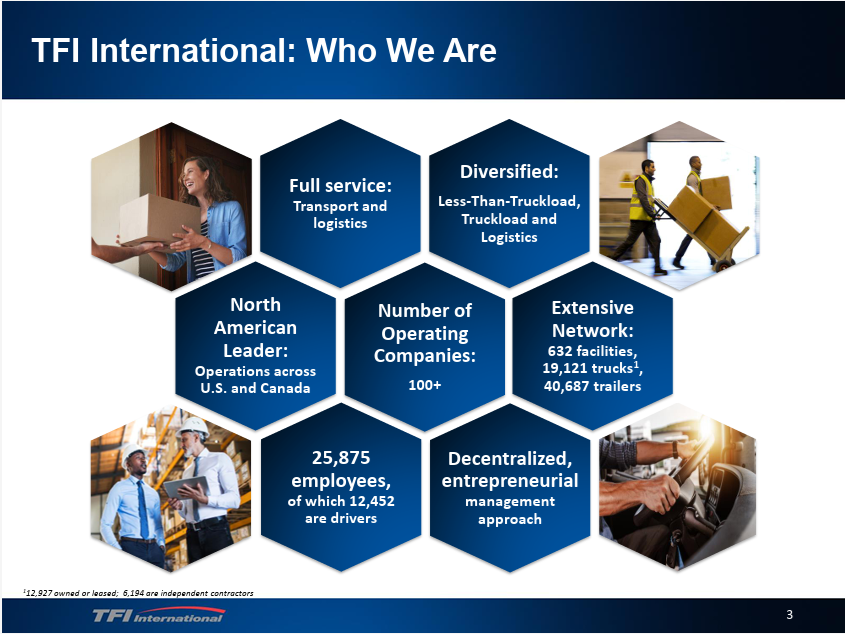
TFI International ranks among North America’s largest transportation and logistics companies, functioning in Canada, the U.S., and Mexico through three primary divisions: less-than-truckload (LTL), truckload, and logistics.
The composition is vital.
LTL is where size can deliver a significant benefit. Rather than dedicating an entire trailer to a single customer, TFI consolidates smaller shipments, optimizes routes, and enhances truck utilization. When effectively managed, this network elevates margins since the same asset caters to multiple clients more efficiently.
Truckload encompasses full-load moves, specialized transport, and brokerage services, while logistics further broadens the model with freight forwarding, transportation management, and asset-light offerings. Essentially, TFI represents not just a trucking company but a transportation platform with diverse revenue streams adapted to market conditions.
This diversification forms a part of its attractiveness. When one sector falters, another can mitigate the effects, rendering the business more robust than a single-focus operator with a narrower focus.
Reasons the Market Remains Attentive
Bull Perspective
TFI’s investment appeal is founded on scale and execution.
The firm has established itself as a key player in North America via strategic acquisitions, like the UPS Freight acquisition in 2021, which was smoothly integrated to enhance profitability—a complex achievement in the transportation sector.
The company generates over 70% of its revenue in the U.S., the continent’s largest freight market. Its acquisition of Daseke strengthened its foothold in flatbed trucking and industrial markets, likely serving as a boost when the cycle revives.
Additionally, the company excels at preserving cash flow, emphasizing free cash flow, customer service, and operational efficiency, which is reassuring for a cyclical firm navigating a downturn.
Bear Perspective
A reality check indicates that the stock’s volatility is warranted.
Transportation is heavily cyclical. Economic downturns result in reduced shipment volumes, pricing pressures, and loss of scale advantages. TFI cautioned in early 2025 of a possible 30–35% EPS decline, resulting in immediate market repercussions.
This was anticipated. Weak freight demand, tariff instability, and management’s acknowledgment that shippers’ reluctance amid uncertainty influences trucking volumes contributed to the difficulty.
Risks associated with execution in acquisitions, ongoing fuel and labor expenses, and a leadership transition with CEO Alain Bédard stepping down are also concerns. It’s not a “sleep well at night” investment; fluctuations come with the territory.
300 Stock Ideas Featuring a Positive Dividend Triangle—Access the List Now
The Dividend Triangle facilitated the creation of a list of 300 companies exhibiting positive 5-year trends in revenue, EPS, and dividends.

<